Frequently Asked Questions

Below is a list of the most common questions asked by ELCO customers. Take a look at the responses to these questions to determine if your question is answered. If you do not find a satisfactory answer, or would like more information, call the ELCO office at (970)-493-2044.
Q: I think I have a water leak - how can I tell?
Your water meter may be the most useful tool in identifying leaks. ELCO's meter readers find most major leaks but smaller leaks are more difficult to detect. To see if you have any leaks, follow these easy steps...
- Locate your water meter. It is usually in a pit in your front yard under a metal lid. You will need a pair of pliers or vice grips to remove the lid. If there are two meters in the pit, the one closest to your house is yours. Most meters are equipped with a scanner that allows the meter to be read without removing the lid. When removing and replacing the lid, be careful to avoid damaging the wire that connects the meter to the scanner mounted in the lid. The wire needs to be inside the pit and the second cover inside the pit needs to be returned to the original position when the metal lid is reinstalled.
Once you locate your water meter, turn off all your water faucets and fixtures. Look for the leak detector on the face of the meter. The leak detector is usually a small red triangle or dial that slowly rotates when water is flowing through the meter. The readout on some older water meters will not look like the one in the photo. Contact the ELCO office if you have trouble locating your meter or the leak detector on your meter.- If the leak detector on the face of the meter is moving when the water is off, you probably have a leak. The most common culprit is a toilet. A toilet flap that is not seated correctly can cause water to constantly seep from the toilet tank to the bowl. Place a few drops of food coloring in the toilet tank. Let it sit for 15-20 minutes without flushing then check the bowl for traces of the food coloring. If the water in the bowl is colored, you have found a leak that can probably be fixed by replacing the toilet flap. Other common causes of leaks are faulty underground sprinkler systems or worn faucets. It is in your best interest to find all leaks and have them repaired.
Q: Does the District repair leaks inside my home?
No. The District's responsibility for repairs ends at the water meter. All water lines and devices on the customer's side of the meter are the responsibility of the customer. Likewise, all facilities on the District's side of the meter (including the meter) are repaired and maintained by the District.
Q: Where do I connect a lawn sprinkler irrigation system or yard hydrant to my water service line?
The customer may connect to their water service line anywhere ontheir side of the meter pit, with exception of no less than fivefeet (5') clearance of the meter pit. Click HERE for a detail ofconnecting to the customer side of the water service line.
Q: How much water does a typical household use?
An average residential household uses approximately 180,000 gallons of water per year. Around 50% of total household water use is dedicated to landscape irrigation. The other 50% is used indoors. The graph below shows the relative percentage of indoor water use for different fixtures.

Q. What are some possible causes for higher water usage?
When water consumption is higher than normal, we find that the water has been used on the property but in a way that was not expected. The following is a list of possible, though not definitive, causes for high water usage:
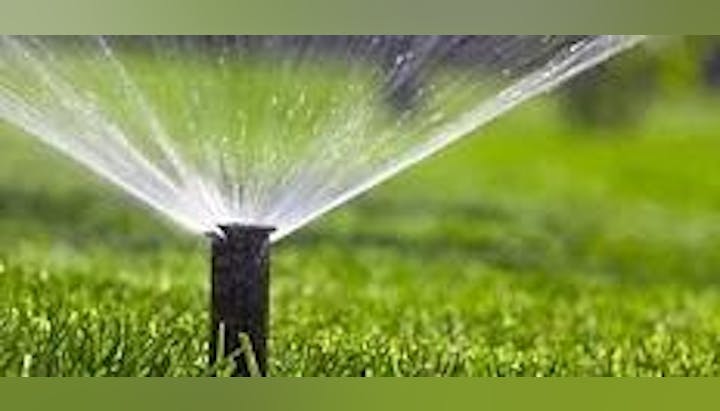
- Poorly adjusted sprinkler systems that result in unnecessary irrigation. Often this is caused by power outages or sprinkler controllers that are not adjusted for changing conditions
- Over irrigation on slopes or outlying landscaping due to missing sprinkler heads or broken pipes
- Hose left on in yard by mistake
- Leaking toilet
- Leaks from faucets or shower heads
- Malfunctioning water softeners
- Cleaning or construction crews adding to normal water consumption
- Extra House guests - kids home from college or extra family staying over
Q: Why does my bill suddenly have a conservation charge on it?
The conservation charge is imposed if a customer's water use exceeds their annual allotment. The yield of the water rights provided to ELCO at the time of construction is the basis for a customer's annual allotment. The water rights required for single family customers are based on their lot size. Once a customer goes over their annual allotment, their rate increases from $2.47 to $4.40 per 1,000 gallons until their allotment is set back to zero in January. The year-to-date water use and annual allotment for each customer is shown just below the graph at the bottom of their monthly water bill.
Q: What can I do to reduce my water bill?
Since outside irrigation typically accounts for half of a household's water use, the greatest savings can be realized by improving lawn watering practices and reducing irrigated areas. Toilets, baths and showers account for almost 2/3 of the water used indoors. For that reason, interior water conservation should be focused on bathroom fixtures.
Call the ELCO office if you need more information about water conservation.
Q: What is "Xeriscaping?"
"Xeros" is a Greek word that means "dry." Xeriscape refers to a landscape that requires little supplemental water. It does not refer to a dry, barren landscape, nor is a Xeriscape a "no maintenance" landscape. The concept of Xeriscape was developed by the Denver Water Department in response to water shortages experienced in the late 1970s.
Xeriscape Garden Image

Xeriscaping does not mean you have to change the way you live or care for your landscaping. It means reducing water waste that can result from improper irrigation or poor landscape choices. Xeriscape is a means to achieve highly attractive, comfortable landscapes without excessive water use. A well designed landscape plan based on Xeriscape principles can reduce outdoor water use by seventy percent or more.
Your landscape is an investment in your comfort and in the value of your property. A good Xeriscape can increase your property value by as much as 15%. You can protect and beautify your landscape investment by drought-proofing it. When water use is restricted, inefficient water-thirsty landscapes suffer the most.
Like traditional landscapes, a Xeriscape may be designed to minimize labor or to require frequent care. Many people appreciate beautiful landscapes, but have limited time to spend tending a garden. By using plants that are well adapted, mulches that suppress weeds and conserve water, and drip irrigation to efficiently use water, Xeriscaped yards can be colorful and fragrant without the burden of frequent maintenance.
Q: What does the District do if my water usage appears higher or lower than normal?
When ELCO personnel obtain your meter reading, a computerized reading device checks the consumption to see if it appears to be higher or lower than normal. The computer uses a historical average for the same time period from the previous year, with an allowance for seasonal fluctuation and normal deviation. If water use is too high or too low, the meter reading is verified by our meter reader.
As a normal course of action, the meter reader will check for a possible leak and, if it appears that there is a leak, a door hanger is left to notify you of the possibility of a leak. Information collected by the meter reader is entered into the computer for later review.
When meter readings are returned to the District's office, accounts with unusual consumption are automatically printed out for further review by customer service personnel. If this review does not offer an explanation, the meter reader is sent back into the field to verify the reading.
Q: How do I shut-off my water?
Almost every home, apartment and business has a shut-off valve somewhere inside the building. In an emergency, it is important that you know where your shut-off valve is located. You do not want to search for the master valve if the basement is flooding or carpets are being soaked.
The most likely location for the shut-off valve is where the water supply line enters the building. It might also be near the water heater or clothes washers. Once you have found the shut-off valve, mark it with a tag or bright paint. Also, be sure it can be turned on by hand. If not, keep a wrench nearby.
If you cannot locate your shut-off valve or it is necessary to shut the water off at the water meter, call the District office (day or night) for a customer service representative to shut off the water at the meter.
Q: Can the District help me locate my water service line?
No. The District will locate water mains and service lines up to the water meter. The District does not locate customer-owned service lines on private property as a general rule. Some plumbers have equipment that can locate private water service lines.
Q: My water pressure seems to have dropped - what's wrong?
If you have had some plumbing work recently done on your property, the plumber may have made adjustments or inadvertently left valves partially closed. Please review the following list of potential problems: Check the water supply valve normally located on your water service line. This valve may be broken or in a partially closed position that can restrict the normal flow of water.
- Check the pressure regulator. This is usually located in the meter pit or on the water service line entering your home or business. If broken or improperly adjusted, your pressure will be affected.Not every property has a pressure regulator. They are recommended for properties where the pressure exceeds 80 pounds per square inch (psi). Contact the ELCO office if you suspect a problem with your pressure regulator.
- Check all faucet screens and shower heads for build-up that could restrict the flow of water.
- Check plumbing valves under sinks and basins, making sure they are completely open.
- Check for other water leaks, both in the house and in outside irrigation systems that may cause low water pressure in the rest of your system.
If checking these items does not solve the problem, contact the ELCO office during normal business hours. A customer service representative will check the pressure in the District's system.
Q: I saw someone open a fire hydrant. Is that allowed?
Only employees of the District and Poudre Fire Authority can operate fire hydrants. In recent years, several fire hydrants owned by ELCO have been vandalized. The most serious incidents involve hydrants being opened during early morning hours. Hydrants left running can cause significant problems. There is also potential to permanently damage the hydrant or underground water pipes. Contact ELCO if you see a hydrant being operated by anyone but a fire fighter or an ELCO employee.
Q: The bushes around my meter pit have been trimmed. Was that done by someone from ELCO?
Probably so. Your meter pit is a vital link between you and the District. The meter reader must access the meter pit each month to obtain an accurate record of water consumption to insure proper billing. If the reader can not safely access the meter, he will remove obstructions.
The meter reader is usually the customer's first line of defense in the event of a leak. If we are unable to remove obstructions, the meter reading will be estimated and the meter reader will be unable to alert the customer to any problem.
Q: What should I do to protect my water lines from freezing?
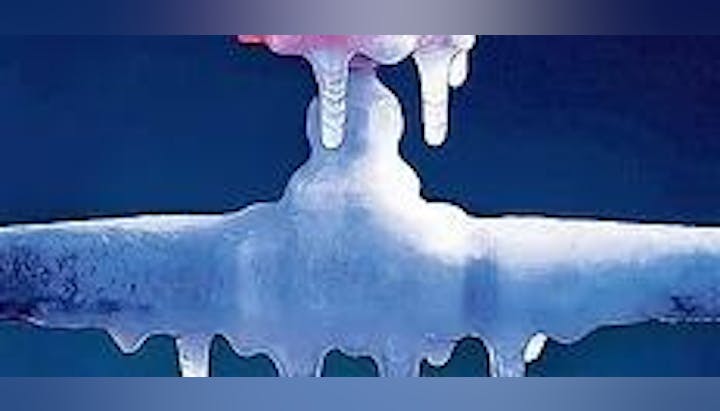
Each winter, one or two ELCO customers come home to find their basement flooded. While they were away, a pipe froze and broke. It is important that the heat is kept on in homes that are empty during the winter. Irrigation systems should be drained and winterized each fall. Pipes or faucets in unheated areas need to be insulated or drained.
The most common mistake homeowners make is forgetting to disconnect and drain outdoor hoses. Detaching the hose allows water to drain from the faucet. If a hose remains attached to an outdoor faucet, freezing temperatures can burst the faucet or the pipe that supplies the faucet.
If you find a frozen pipe, carefully try to thaw it with a hair dryer. If that doesn't work, call a plumber. Call the ELCO office if you believe your water meter has frozen. In extremely cold weather, it is not uncommon for water meters to freeze.
Q: Does ELCO have enough water to maintain an adequate supply during a serious drought?
The District owns the right to use water from both the Colorado-Big Thompson ( C-BT) Project and the Poudre River . Developers must provide enough C-BT or Poudre River water to supply the anticipated water demands of the homes and businesses they build.

ELCO maintains a raw water supply that is adequate to serve its customers in all but the driest years. Several years of hot, dry weather nearly exhausted supplies in northern Colorado in 2002. In response to that potential water supply shortage, ELCO and other water suppliers in the area asked customers to limit their lawn watering. Customers responded by reducing water use approximately 20%. A similar request for conservation would be made in the future if raw water supplies were limited.
The ELCO Board believes the District should own enough water to meet the demands of its customers most of the time, but not 100% of the time. It would be extremely costly to acquire enough raw water to allow ELCO customers to maintain their water use patterns during an extended drought.
If ELCO owned raw water supplies necessary to meet historical customer demands during severe drought, it could deprive agricultural users of a reliable supply of irrigation water and perhaps promote construction of larger water storage projects. The ELCO Board believes it makes more sense to ask customers to voluntarily reduce their water use during occasional drought periods.
Q: Should I drink bottled water?
Some customers may not like the taste of soft water or may prefer to drink water that does not contain chlorine or fluoride. Those customers may want to buy bottled water or install a home treatment device for these reasons.
Customers who drink bottled water or water from a home treatment device should do so because they prefer the taste, not out of concern for the safety of water provided by ELCO.
Q: What is the 'pink slime' that I sometimes find in my shower?
Certain species of airborne bacteria gravitate towards and thrive in a moist environment, such as showerheads, sink drains, tiles, and dog dishes. These slimes are naturally occurring and are generally harmless. The best way to avoid this problem is to keep these surfaces free from the bacterial film through regular cleaning utilizing Lysol or a chlorine-based product.
Q: Is ELCO's water hard or soft?
The hardness of water is referred to by three types of measurement: grains per gallon, milligrams per liter (mg/l), or parts per million (ppm). The water supplied by ELCO has a hardness of approximately 35 mg/l or 3 grains per gallon. That amount of hardness makes ELCO's water "soft".
Q: Is there fluoride in ELCO's water?
Approximately 0.2 parts per million (ppm) of naturally-occurring fluoride exist in the raw water entering ELCO's treatment plant. Fluoride is added during treatment to increase the level to 0.9 ppm. That is the amount of fluoride health officials recommend in drinking water.
Q: Can I pay my bill with a credit card or electronic banking?

Yes. The District does accept credit card payments in person or over the phone. ELCO also accepts online payments from customers' checking or savings accounts. Call the office at (970) 493-2044 for details.
Q: Does ELCO offer automatic withdrawals from checking accounts?
Monthly charges can be automatically drafted from your checking or savings account. Payments are drafted from designated accounts on the 10 th of each month. To initiate automatic bank withdrawals, complete an authorization form and return it with a voided check. Deposit slips can not be substituted for a voided check. Customers who sign up for automatic bank withdrawal continue to receive a monthly bill so they can track their water use.
Q: My property is located within the City of Fort Collins . Why don't I receive water service from the City?
Expansion of the City of Fort Collins to the north and east has resulted in annexations of property served by ELCO. Transferring those properties to City water service would compromise the ability of ELCO to serve its remaining customers and increase the cost of development within the District. The City and ELCO have agreed that whichever utility can best serve new developments in northeast Fort Collins should do so. So far, ELCO has been able to accommodate all new City developments within its service area.
Q: I was told the District has an easement on my property. What does that mean?
An easement gives the District the right to construct and maintain water lines on private property. Most easements were granted when land was platted for development. The property owner must allow the District to access facilities within easements located on their property. The property owner has responsibility for maintaining the land in the easement, but in most cases the District will restore any areas that are excavated or damaged during maintenance work.